How Deep Can Helical Piles Go? & Other FAQs

How Deep Can Helical Piles Go? & Other FAQs

Helical piles, also known as screw piles, are innovative foundation solutions that have gained popularity in construction and engineering projects. These versatile piles offer several advantages, such as ease of installation, minimal environmental impact, and high load-bearing capacity. As more people turn to helical piles for their foundation needs, it’s essential to address some common questions that arise. 

In this post, we’ll explore the most frequently asked questions our team gets from industry professionals. Click the links below to skip to your question/answer of interest, or scroll to read the full article.

How Deep Can Helical Piles Go? 

What Types of Soil Are Suitable for Helical Piles?

How Are Helical Piles Installed?

What Load Capacity Can Helical Piles Support?

Are Helical Piles Suitable for Retrofitting?

Can Helical Piles Be Used in Seismic Areas?

What Is the Environmental Impact of Helical Piles?

Are Helical Piles Cost-effective?

Can Helical Piles Be Removed and Reused?

Are Helical Piles Resistant to Corrosion? 

How Long Do Helical Piles Last?

How Deep Can Helical Piles Go? 

One of the primary advantages of helical piles is their adaptability to various soil conditions. The depth to which helical piles can be installed depends on factors such as soil type, load requirements, and project specifications. 

Generally, helical piles can be installed to depths ranging from 10 feet to over 100 feet. The helical design allows them to penetrate deep into the ground while providing superior stability.
What Types of Soil Are Suitable for Helical Piles?

Helical piles are suitable for a wide range of soil types, making them a versatile foundation solution. Whether it’s cohesive soils like clay, granular soils such as sand, or mixed soils, helical piles can be customized to meet the specific requirements of the project. Their adaptability makes them an excellent choice for projects with varying soil conditions.

How Are Helical Piles Installed?

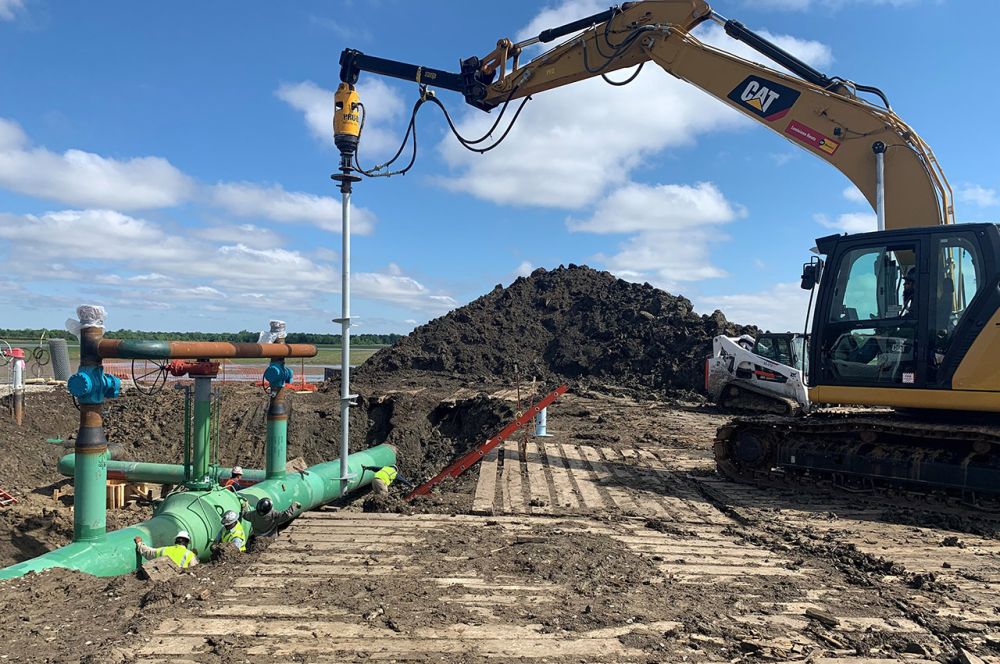
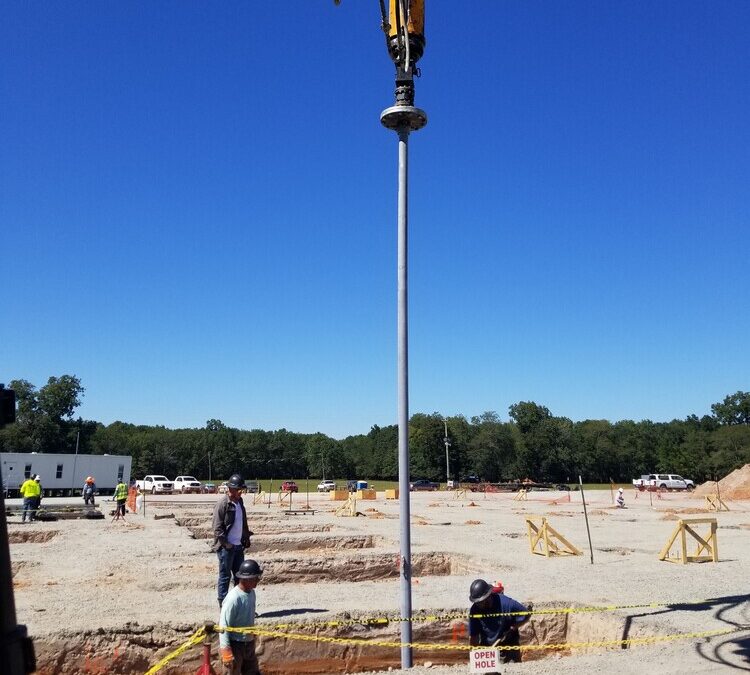
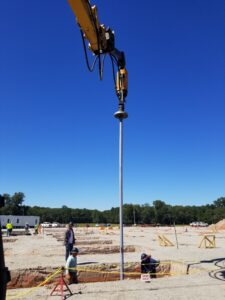
The installation process for helical piles is relatively straightforward and efficient. A hydraulic torque motor is used to drive the helical piles into the ground, creating minimal disturbance to the surrounding environment. 

The torque required for installation depends on the soil conditions and the load-bearing capacity needed. The helical piles are carefully monitored during installation to ensure they reach the desired depth and provide the required support.

What Load Capacity Can Helical Piles Support?

Helical piles are known for their impressive load-bearing capacity. The design of the helical plates allows them to distribute the load evenly, making them suitable for both compression and tension applications. 

Load capacity can vary based on factors such as pile size, helix configuration, and soil conditions. Engineers and contractors work together to determine the appropriate helical pile specifications to meet the specific load requirements of a project.

Are Helical Piles Suitable for Retrofitting?

Yes, helical piles are an excellent choice for retrofitting existing structures. Whether it’s due to foundation settlement, natural disasters, soil instability, or other issues, helical piles can provide additional support and stability. The installation process is minimally invasive, making it a practical solution for retrofitting without major disruptions to the existing structure.

Can Helical Piles Be Used in Seismic Areas?

Yes, helical piles can be designed to withstand seismic forces, making them suitable for projects located in seismic-prone regions. Engineers consider factors such as soil type, seismic design parameters, and project specifications to customize helical pile solutions that meet the necessary seismic requirements.

What Is the Environmental Impact of Helical Piles?

Helical piles are considered environmentally friendly due to their minimal impact on the surrounding soil and ecosystem. The installation process generates less noise and vibration compared to traditional foundation methods. 

Additionally, the use of helical piles often reduces the need for excavation and the associated environmental disruption.

Are Helical Piles Cost-effective?

The cost of helical piles depends on various factors, including project size, soil conditions, and load requirements. While the initial cost may be higher than some traditional foundation methods, the time saved during installation, reduced labor costs, and adaptability to different soil types often result in overall cost savings.

Can Helical Piles Be Removed and Reused?

In some cases, helical piles can be removed and reused for other projects. The ease of extraction depends on factors such as soil conditions, installation depth, and the specific design of the helical pile. Reusing helical piles can provide a sustainable solution and contribute to cost savings on future projects.

Are Helical Piles Resistant to Corrosion? 

Helical piles are typically made of high-quality materials such as galvanized or coated steel to resist corrosion. However, the resistance to corrosion can vary depending on the environmental conditions of the project site. Engineers consider factors such as soil composition and moisture levels to ensure the longevity and durability of helical piles in different settings.

How Long Do Helical Piles Last?

Helical piles can last 100 years or more. Most contractors estimate a lifespan of around 150 years, but some helical piles have even lasted 300+ years. This is well over the expected lifespan of other popular foundational solutions like stone (100 years), slab concrete (80 years), ICF blocks (75 years), and wood (25 years). 

Factors that influence helical pile lifespan may include:

  • Helical pile material
  • Load-bearing capacity calculations
  • Soil conditions
  • Location/environment

Have a Question You Didn’t See Answered Here? Contact Us

If you have additional questions or would like to learn more about how helical piles can benefit your project, please don’t hesitate to get in touch with our team. As a turnkey solutions provider, we’re here to help you every step of the way — from testing and planning to fabrication, installation, and beyond.
Can Helical Piles Be Used For Bridge Foundations?

Can Helical Piles Be Used For Bridge Foundations?

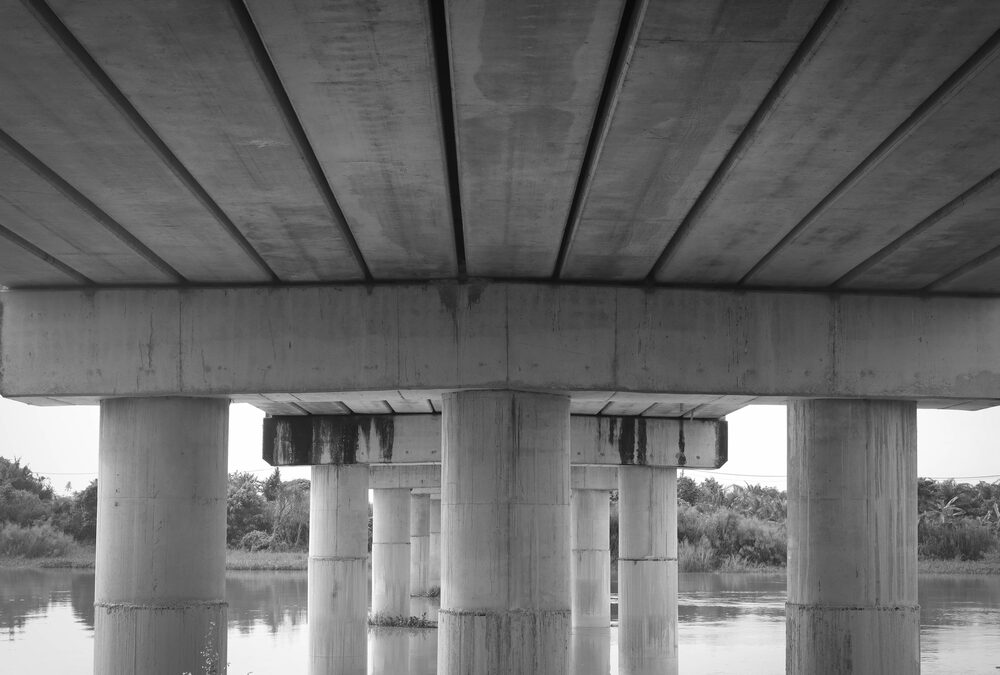
Bridges are crucial in connecting communities, facilitating transportation, and supporting economic development. The success and longevity of these vital structures heavily depend on the type of foundation chosen during construction. 

Among the various options available, helical piles emerge as a superior choice, particularly for long-span bridges and areas with challenging soil conditions. 

How Helical Piles Work

Helical piles work on the principle of utilizing helical plates or blades to screw into the soil, creating a strong connection with stable strata below the less stable surface layers. This process provides lateral stability and prevents settlement, ensuring the longevity and safety of the bridge. The helical shape of the piles increases the bearing capacity and enhances their ability to resist both axial and lateral loads.

The Process of Building a Helical Pile Bridge Foundation

Helical piles should be fabricated and installed by a certified and experienced contractor to ensure safety and quality before, during, and after the process. 

1. Site Assessment

The first step in constructing a helical pile bridge foundation involves a thorough site assessment to understand soil conditions, geological features, and load requirements. This data informs the design and placement of the helical piles.

2. Helical Pile Installation

A specialized helical pile installation rig is employed to screw the piles into the ground. This process involves rotating the helical piles into the soil until they reach the desired depth, providing a secure and stable foundation. The piles are spaced strategically based on engineering calculations to distribute the load evenly.

3. Connection to Bridge Substructure:

Once the helical piles are in place, they are connected to the bridge substructure using specialized brackets. These brackets secure the piles and transfer the load from the bridge to the piles, creating a robust foundation system.

Top Benefits of Helical Piles for Bridge Foundations

What makes helical piles better than other types of foundations — in bridge applications and others? 

Load-bearing Capacity

Helical piles offer exceptional load-bearing capacity, making them ideal for supporting the immense weight and dynamic loads experienced by bridges. This is particularly crucial for long-span bridges where the foundation must withstand significant forces over extended distances.

Adaptability to Poor Soil Conditions

One of the key advantages of helical piles is their adaptability to various soil conditions. Whether dealing with loose or compacted soils, expansive clays, or areas prone to subsidence, helical piles provide a stable foundation by penetrating deep into the ground, reaching more stable strata.

Minimal Environmental Impact

Compared to traditional foundation methods, helical piles have a minimal environmental impact. Their installation requires less excavation, reducing disturbance to the natural surroundings. Additionally, helical piles generate less noise and vibration during construction, minimizing disruption to nearby communities.

Speed and Efficiency

The installation process of helical piles is faster and more efficient than traditional foundation methods. This is crucial for bridge projects that require timely completion, minimizing traffic disruptions and ensuring swift access for communities. 

Contact Elite Helical for Expert Helical Pile Installation

Helical piles’ load-bearing capacity, adaptability, minimal environmental impact, and efficient installation process make them a reliable choice for ensuring the stability and durability of bridge structures. As technology advances, helical piles continue to redefine the standards for bridge foundation construction, contributing to the development of safer, more resilient infrastructure.

If you have a foundation build, repair, or replacement project, get in touch with our team to learn how helical piles could work for you. 

Helical Pile Load Tests: What, When, How, and Why?

Helical Pile Load Tests: What, When, How, and Why?

If you’ve been looking into helical pile foundations, you may have seen mention of helical pile load tests. Load testing for helical piles can seem confusing, and it’s something we get a lot of questions about. To help tackle some of those questions, we’re breaking down the what, how, when, and why of helical pile load testing. 

What is a Helical Pile Load Test? 

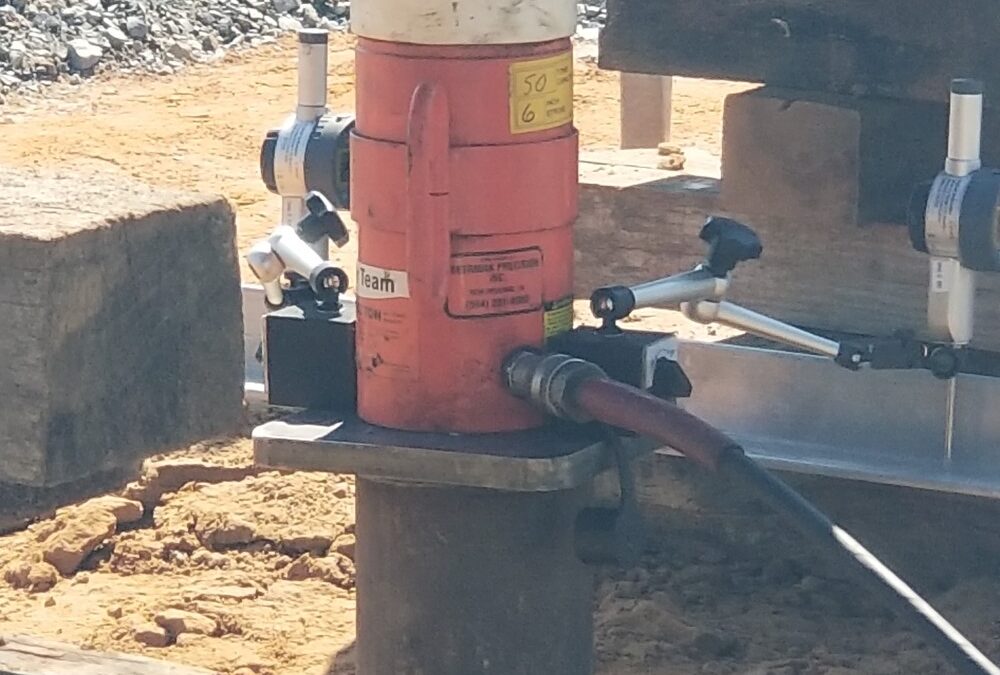
A helical pile load test is a way to measure how a helical pile or other deep foundation elements will perform under an applied load. Essentially, it’s a way of testing whether the helical pile or pile formation will be able to bear the load necessary for the application. This is tested by placing the piles in their installed condition and using equipment to place a load on the piles.

Common Load Testing Methods

There are two main ways to load test helical piles: tension and compression. 

In compression load tests, an axial load is placed atop the test piles, often using a steel reaction frame or hydraulic jacks. Then the soil displacement is measured to determine the pile or pile group performance. These methods are outlined by ASTM D1143/D1143M-20 Standard Test Methods for Deep Foundation Elements Under Static Axial Compressive Load.

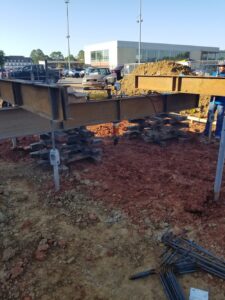
In tension load tests, a load is generally applied to piles via test beams and timber cribbing. The testing procedures for this method are defined in ASTM D3689/D3689M-22 Standard Test Methods for Deep Foundation Elements Under Static Axial Tensile Load. This form of testing is often less complex and time-consuming than axial compressive load testing. 

When is Load Testing Necessary? 

Load testing may be required by regulations for some large projects, but it’s not always necessary for helical pile foundations. In fact, it’s just one of the methods for determining helical pile load capacity, along with the torque correlation and bearing capacity in soil calculation methods. 

For smaller projects or projects for which load testing is not mandated, load testing can be cost-prohibitive and can result in significant delays to the project during the design and construction phases. 

when is load testing necessary

When Should Load Tests Be Performed?

According to the U.S. Department of Transportation Federal Highway Administration, load testing for helical pile foundations should be undertaken when there is uncertainty about the capacity of the piles or soil. This includes when using an unproven or new type of pile, when the soil conditions are variable across the project when soil conditions are expected to vary over time (e.g., settling), when the site conditions are unusual, or the safe loading capacity is otherwise unsure.

When re-using existing piles, they should be load tested to confirm bearing capacity, as it may vary from what was calculated during the initial use. If the design load is higher by a significant factor than typical design loads, that’s also an appropriate time to load test helical piles.

Load testing should also occur when there is a significant opportunity for cost savings, as non-load-tested pile installations require a higher factor of safety (3) than required for load-tested piles. This means that load testing could reduce the number of necessary piles and pile formations for a project, though the savings would be most significant for large-scale projects.

Why Would a Piling System Fail a Load Test, and What Do You Do When That Happens? 

A pile or piling system would fail a load test when the pile does not have adequate bearing capacity. This can occur if the piles are not spaced properly, there aren’t enough piles being used, the wrong size or type of piles is being used, the soil conditions differ from initial calculations, or even manufacturing defects in piles. Outright pile failure is rare, but if the settling or deflection of the pile is outside of the acceptable range, that would constitute a failure of the load test.

If your pile system fails a load test, use the test data to determine the correct number, size, type, and placement of piles. Additional soil testing may also be required.

Trust Elite Helical: Turnkey Helical Pile Contractor

If you’re interested in a helical pile foundation for your next project, partner with us at Elite Helical Solutions. Helical piles are all we do, and whether your application requires pile load testing or not, we’ll create a helical pile foundation that meets your bearing capacity needs, whether in weak soil, seismically active areas, or even underwater. Get in touch today to discuss your options for helical pile foundations. 

Your Guide to Helical Pile Spacing Requirements

Your Guide to Helical Pile Spacing Requirements

Helical pile foundations present a great solution for a variety of deep foundation needs — from underwater installation to support offshore wind turbines to commercial buildings in seismic activity-prone areas. They can be more cost-efficient than traditional foundation options and boast a better environmental impact. But they also present unique design considerations. 

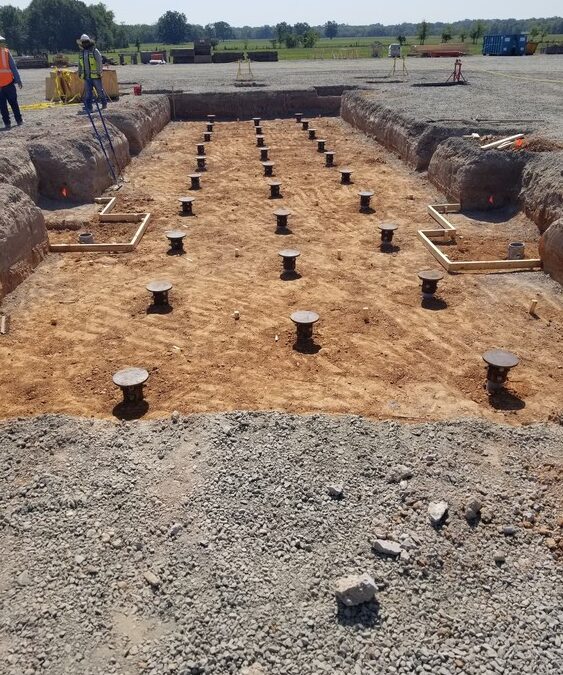
While traditional poured foundations span the entire footprint of the structure they support, helical piles must be spaced in order to ensure their integrity and provide adequate bearing capacity to the supported structure. This means that knowing the requirements for helical pile spacing is necessary to install a functional pile foundation. 

Keep reading for what you need to know about spacing requirements for helical piles.

How Should Helical Piles Be Spaced? The Top Recommendation

Adjacent helical piles should be spaced, center-to-center, five times more than the diameter of the largest helix. Spacing of only three times the largest helix diameter is considered the  minimum necessary spacing, but there are special circumstances where closer than this may occur with a reduced safety factor or battering of the pile to keep the proper helix distance.

All relevant building codes require that helical pile foundations have adequate load bearing capacity to support the intended structure. (The load bearing capacity of helical piles can be calculated by a few different methods.) This will affect the depth to which the piles are installed, as well as the diameter of the helical plates, which will in turn affect the required pile spacing.

What Happens if Helical Piles Aren’t Spaced Properly? 

It’s important to retain a minimum spacing of helical piles of at least three diameters; otherwise, the helical plate of one pile can contribute stress to the soil bearing a nearby pile, reducing its capacity for bearing the weight of the supported structure.

Maintaining minimum spacing is necessary at bearing depth — that is, the depth of the helical plates on the piles. For structures that require a helical foundation with a high load bearing capacity, helical piles can be installed at angles, ensuring that they are adequately spaced at bearing depth, though they may be closer together at the tops of the piles, which have no helices.

The possible outcome of piles spaced too far apart is more intuitive: they will be unable to fully support the load of the structure, and the structure may sag between the piles or incur other damage. This may also result in damage to overloaded piles, or even total foundation failure.

Get Expert Helical Pile Design & Installation at Elite Helical

At Elite Helical, helical piles are our entire business. From our design engineers to our installers, we’re well-versed in the best practices for helical pile foundation design and installation, from helical pile spacing to calculating soil bearing capacity. Contact us today to discuss how a helical pile foundation can support your next industrial construction project, midstream/pipeline job, energy transmission, and/or commercial construction need.

How Do Helical Piles Work for Natural Disaster Resistance, Response & Relief?

How Do Helical Piles Work for Natural Disaster Resistance, Response & Relief?

According to the National Oceanic and Atmospheric Administration (NOAA) — the government agency that tracks weather, climate, and environmental conditions — 18 climate/weather events in 2022 caused over $1 billion in damage each. Since 1980, there have been 341 such events. It is not just important, but absolutely critical to prepare for, and prepare to respond to, these natural disasters. This includes building design and construction practices. 

Helical piles are a deep foundation solution: slender metal rods with helical bases that provide stability and anchoring, that can increase the resistance of structures to natural disasters, as well as aid in the response to the damage they cause. 

Helical Piles for Natural Disaster Resistance

Foundations using helical piles are found to have better earthquake resistance than poured concrete foundations. Because piles are screwed deep into the earth, they aren’t as affected by soil liquefaction (when the soil behaves like a liquid due to saturation and a change in the stress conditions, like the shaking of an earthquake) as traditional foundations that are closer to the surface soil. They are also not subject to shifting due to poor preparation or compaction of soil beneath the foundation, as they are screwed into and not resting on the ground.

For the same reasons, using helical piles in loose or wet soils — such as those that occur on hurricane-prone coastlines or floodplains — can improve structures’ resistance to the fallout from those types of weather events. Metal piles can be treated for corrosion resistance and will not wash out in consistently wet conditions like concrete can.

Deep foundations like helical piles also have positive implications for wind resistance. Piles are screwed into the ground and provide their load-bearing and tension-resisting capacities from the friction between the helical plate, the screw-like part of the pile, and the ground into which they are driven. The deeper the pile, the greater the load-bearing capacity and the increased ability to resist lateral stress — such as that from strong winds. For this reason, helical piles are often the foundation of choice for top-heavy, wind-exposed structures like wind turbines and solar panels. In areas with vertical infrastructure prone to heavy winds in tornado or hurricane conditions, piles may increase their resistance to damage.

Helical Piles for Natural Disaster Response

Much of our most critical infrastructure involves transportation and energy — roads, bridges, power lines, solar panel installations, wind turbines, cell towers, etc. As mentioned earlier, many of those structures already make use of helical pile foundations. As these structures are so essential, they need to bring back into service after a disaster quickly. 

Under the right conditions, helical piles can be installed as quickly as 30 seconds per lineal foot or 25 to 30 piles per day on a project. Depending on the diameter of the piles, type of soil, and depth to which the foundation is being installed, entire helical pile foundations can be installed in a day. Helical piles have load-bearing capacity from the moment they are installed. 

While it may only take a few hours to pour and level a traditional concrete foundation, it also requires mixing, curing, and finishing time, along with the time it takes to build the concrete forms prepare the ground and assemble all of the necessary equipment. Helical piles require minimal equipment and ground preparation.

In fact, helical piles can be installed with not only minimal equipment in terms of number of equipment types. You really only need a hydraulic motor of some kind attached to a helical drive head, but minimal equipment in terms of power and size. While for standard installations this is not recommended, due to the limitations it can place on the load-bearing capacity of the piles, in tight spaces and emergency situations, helical piles have been installed with skid steers (Bobcats).

In the case of hurricanes and flooding, helical piles are useful for shoring up foundations of necessary infrastructure because they can be installed underwater and in loose, sandy, wet soils. This is why they are often used in offshore construction, for structures like offshore oil rigs and wind turbine installations. Concrete cannot be set properly in wet conditions, but helical piles can be galvanized to protect from water and rust.

Restoring and fortifying important buildings and structures is just as important in heavy winter weather like blizzards and ice storms, which can have a huge toll on energy systems. Unlike concrete, helical piles can be installed in cold, wintery conditions, as they are not temperature sensitive. They resist frost heave, don’t require curing or heating, and can be installed even when the ground is frozen. 

Helical Piles for Natural Disaster Relief

Helical piles can be an essential tool in rebuilding, for several reasons. Firstly, helical piles are not only useful as a primary foundation, but also as additional support for existing concrete foundations. Piles can be installed not only vertically, but laterally, and can be anchored to existing weakening foundations to remediate and strengthen them. 

After a 7.1 Mw earthquake struck Christchurch, New Zealand, in 2010, helical piles were used to bolster failing foundations after the damage. Per Geoengineer.com, this solution was favored over the conventional method, injecting grout beneath the existing foundation, as it doesn’t add to the load on the pliable, already overloaded soil.

Another benefit of helical piles for use during natural disaster recovery is cost-effectiveness. Not cheap, in the sense of low quality or a compromise in workmanship, but cost-efficient, as you get strength, durability (helical piles can last for over 100 years), quick installation, and the other benefits of a pile foundation for a price that’s comparable or lower than a traditional poured foundation. That matters to communities, companies, and homeowners that are reeling from severe weather and have to find funding for unexpected rebuilding and repair. 

When we consider the incidence of extreme weather and its effects on us, we become more aware of the environmental effects of our actions and choices. It is a priority in restoration after natural disasters to future-proof construction for expected changes in weather patterns, but also to perform the construction using environmentally friendly materials, tools, and practices. Helical piles can be a more environmentally sustainable solution than traditional foundations, given their fabrication from recyclable metals, their decreased soil disruption and displacement, and their neutral, inert status in the environment, resisting corrosion and degradation over the long term.

Preparing For or Facing Natural Disaster? Elite Helical Can Help.

If you live in an area at risk of natural disaster — or if you’ve already experienced the devastation one can bring — you may be looking for a more durable foundational solution. Helical piles can offer stronger, sturdier solutions for both residential and commercial properties. Contact us to learn more about how a helical pile foundation might benefit your application.

Which Is Better? Round vs. Square Shaft for Helical Pile Design

Which Is Better? Round vs. Square Shaft for Helical Pile Design

When engineering the ideal helical pile design for your foundational application, there are many important factors to consider. One of them is shape. Here’s some insight on round vs. square helical pile shafts, so you can decide which might option be best suited for your project.

Round vs. Square Helical Pile Shaft

There are two main helical pile shaft designs: round and square. Neither shape is overwhelmingly “better” than the other — it just depends on your project’s conditions and goals.

Below, we’ll list each type of helical pile design, along with its typical sizes, advantages, disadvantages, and applications.

Round-Shaft Helical Piles

Round-shaft helical piles are made of steel tubes with a circular, hollow cross-sections. They’re typically wider in diameter than most square-shaft piles. This makes round-shaft helical piles the best type of helical pile shaft for resisting lateral loads.

You can see the round shape of these helical piles from one of our recent projects:

Trace CP3

Sizes

Typical sizes for round-shaft helical piles are: 2.875”, 3.5”, 4.5”, 6”, 8”, and 10”+.

Advantages

Round-shaft helical piles bring the following advantages:

  • Ideal for soft soils
  • Able to support large lateral loads
  • Higher installation torque rating
  • Can be filled with grout for boosted structural durability

Disadvantages

Because round-shaft helical piles generally have larger diameters than square-shaft piles, they can be more difficult to insert and stabilize in very dense or rocky soils.

Suggested Applications

Round-shaft helical piles are most frequently utilized in new construction settings where high lateral loading and/or buckling are concerns.

Square-Shaft Helical Piles

Square-shaft helical piles are solid, square bars made of steel. They’re commonly smaller in diameter than round-shaft helical piles, but can still deliver a great capacity-to-torque ratio. Plus, they offer more stability and ease of installation in certain environmental conditions.

You can see the square shaft of these helical piles from one of our recent projects:

Goodrich Barremore

Sizes

Typical sizes for square-shaft helical piles are: 1.5”, 1.75”, 2”, and 2.25”.

Advantages

Square-shaft helical piles have their own set of advantages, including:

  • Ideal for very hard, dense, or rocky soils
  • Better at penetrating without causing ground damage
  • Able to support large axial compressive loads

Disadvantages

Square-shaft helical piles don’t have as much lateral capacity and can’t defend as much against buckling.

Suggested Applications

Due to their unique capabilities and shortcomings, square-shaft helical piles are ideal for projects with rocky or firm soil conditions. They should be avoided in situations where high lateral loading or buckling resistance is necessary.

Combo Helical Piles

In some cases, a combo pile is best. A combo pile is a combination of a round-shaft and a square-shaft pile. It has a square-shaft lead that is followed by a series of round-shaft extensions.

Sizes

Typical sizes for combo helical piles are: 1.5”/2.875”, 1.75”/3.5”, 2.25”/4.5”.

Advantages

Combo helical piles offer the “best of both worlds” when it comes to installation and performance. Here are some of their advantages:

  • Great penetrating characteristics of square-shaft piles
  • Suitable for very dense or rocky soil conditions
  • Large-diameter round shaft extension
  • Bucking resistance
  • Able to support high lateral loads

Disadvantages

Now you might be wondering, “Why wouldn’t I just always use a combo pile?” Well, it’s not always necessary and it’s always more expensive. The extra material costs make combo piles less affordable, so it’s best to only use them when they’re absolutely needed.

Suggested Applications

Combo helical piles are most often used in compression applications. This is when layers of hard soil are buried deep under softer surface soil. Think of environments like high water tables, grout-restricted sites, etc.

For Helical Pile Design & Installation Done Right, Contact Elite Helical.

To get the most out of your helical pile installation, you need to make sure you’re working with the helical pile design that best suits your application’s needs.

Need help making the right choice? Contact our experts at Elite Helical. We’ll walk you through various options, then help you install a foundational system that will last for years.