by Elizabeth Stierstorfer | May 27, 2025 | Helical Piles
Helical piles have become a go-to solution for residential, commercial, and industrial projects. Known for their quick installation, minimal site disruption, and impressive load-bearing capabilities, they offer a reliable alternative to traditional deep foundation systems.
But even the most durable foundations need occasional upkeep. Helical pile maintenance plays a critical role in ensuring long-term structural performance and preventing costly issues.
Let’s review the key aspects of maintaining your helical pile foundation—from routine inspections and corrosion prevention to signs of potential damage and when to call a professional. Whether maintaining an existing foundation or planning ahead, these tips will help keep your investment strong.
Why Helical Pile Maintenance Matters
Helical pile foundations are known for being low-maintenance, but low maintenance doesn’t mean no maintenance. Like any structural system, they’re exposed to environmental conditions, shifting soils, and general wear. Without regular upkeep, even minor issues can result in major structural problems.
Consistent helical pile maintenance helps protect your investment by:
- Extending the lifespan of the foundation system
- Preserving load-bearing performance
Preventing corrosion, movement, or other damage before it spreads
- Reducing the risk of emergency repairs or system failure
Whether your piles support a commercial building or industrial equipment, maintenance ensures your structure remains safe, stable, and code-compliant for years.
7 Key Aspects of Helical Pile Maintenance
Here are seven essential steps you can take to keep your helical pile foundation in top condition.
1. Perform Routine Visual Helical Pile Inspections
Routine visual inspections are the first and most accessible step in proper helical pile maintenance. These quick, low-cost checks help you catch early warning signs before they become bigger issues.
We recommend performing inspections at least once a year, or seasonally in areas with dramatic weather shifts. If your piles are exposed to harsh conditions, take time to look for:
- Surface rust or corrosion, especially near welds or connection points
- Soil shifting or erosion that may expose more of the pile or compromise its stability
- Visible movement or tilt in any of the piles
These simple checks are your first line of defense in any helical pile inspection routine. If anything seems off, it’s time to bring in a professional for a closer look.
2. Prioritize Corrosion Prevention
Helical piles are typically galvanized or coated for durability, but corrosion can still occur, especially in wet, coastal, or chemically aggressive environments. Over time, corrosion weakens the pile’s structural integrity and can shorten the lifespan of your foundation if left unchecked.
Effective helical pile corrosion prevention starts with innovative design and continues with regular upkeep. According to NACE International, corrosion is a leading cause of structural degradation worldwide, costing billions.
Here are a few best practices:
- Apply or maintain protective coatings on any exposed steel components.
- Ensure proper drainage around the foundation to prevent standing water.
- Avoid prolonged exposure to moisture by redirecting runoff or sealing vulnerable areas.
If corrosion is spotted during a visual inspection, take action immediately. Surface rust may be manageable, but deeper corrosion can compromise the entire system’s load-bearing capacity.
3. Monitor for Movement or Settlement
Even a well-installed helical pile foundation can shift over time due to changes in soil conditions, moisture content, or applied loads. Catching early signs of movement is critical to preventing more serious structural issues down the line.
Watch for indicators like:
- Cracks in walls, ceilings, or floors
- Doors and windows that stick or no longer close properly
- Uneven or sloping floors
- Visible pile tilt or displacement (if piles are exposed)
Movement doesn’t always mean failure—but it’s a strong signal that you need a more thorough helical pile inspection. Professional engineers or contractors can assess the root cause and recommend next steps, such as load adjustments or foundation reinforcement.
4. Control Vegetation Around the Foundation
Plants and landscaping might seem harmless, but overgrown vegetation can pose real risks to your helical pile foundation. Roots can disturb the surrounding soil, trap moisture near the piles, and even interfere with inspections or maintenance efforts.
To keep your foundation protected:
- Trim back bushes, grasses, or tree roots near the foundation.
- Avoid planting large trees or deep-rooted vegetation too close to the structure.
- Maintain clear visibility and access to exposed piles for easy inspection and servicing.
Keeping the area clear not only helps prevent soil instability and water retention, but it also ensures that you or your contractor can easily monitor pile performance over time.
5. Address Damage Promptly With Helical Pile Repair
Don’t wait to act if you notice signs of damage during a routine inspection—whether it’s corrosion, movement, or visible cracking. Delaying repairs can allow minor issues to escalate into serious structural concerns that are more expensive and time-consuming to fix.
Common helical pile repair strategies include:
- Reinforcing or replacing compromised piles
- Adjusting load distribution to relieve pressure on weakened areas
- Reapplying protective coatings to prevent further corrosion
In most cases, a qualified contractor can assess the situation and provide targeted repairs without replacing the entire foundation system. Quick action not only restores stability, but it also helps avoid more disruptive interventions down the road.
6. Schedule Professional Helical Pile Inspections
While visual checks are useful, some issues with pile foundations can’t be seen from the surface. That’s why scheduling periodic inspections with a qualified foundation expert is important, especially if your structure shows signs of settlement or aging.
Professional helical pile inspections may include:
- Load testing to verify continued performance under structural demands
- Corrosion assessments using tools that detect below-ground degradation
- Soil evaluations to monitor changes that could impact foundation stability
- Non-destructive testing methods to assess pile condition without excavation
A trained professional can provide a more complete picture of your foundation’s health and offer proactive recommendations to save you time, money, and risk in the long run.
7. Keep Detailed Maintenance Records
Ongoing helical pile maintenance doesn’t end with inspections and repairs; it also includes good documentation. Keeping accurate records ensures you can track changes over time and avoid potential issues.
Your maintenance log should include:
- Dates and findings of all visual and professional inspections
- Details of any repairs performed, including who completed them and why
- Photos of the foundation at different points in time for visual comparison
- Notes on environmental changes (ex., new landscaping, nearby construction, water drainage issues)
Well-kept records are helpful not just for maintenance—they’re valuable if you ever need to transfer ownership, pull permits, or work with contractors down the line. They show you’ve done your due diligence to protect your helical pile foundation.
Protect Your Investment with the Best Helical Pile Maintenance Partner
Staying ahead of maintenance is the best way to protect your helical pile foundation’s strength, stability, and longevity. When you need expert insight or hands-on support, Elite Helical is here to help. Whether you’re maintaining an existing system or starting from scratch, our team offers the experience, equipment, and commitment to get the job done right.
Contact Elite Helical today for expert helical pile inspection, maintenance, and repair services that protect your foundation for decades to come.

by Elizabeth Stierstorfer | Apr 22, 2025 | Helical Piles
Petrochemical facilities operate in some of the most demanding environments in the industrial sector. From corrosive materials to heavy dynamic loads and strict safety regulations, every element—especially the foundation — must be engineered for long-term performance.
Supporting sump floors and complex pipe networks in these settings often involves navigating unstable soils, limited access, and a need to minimize environmental disruption.
That’s why engineers and contractors are turning to helical piles. This foundation solution offers reliable, safe, and efficient support for sump and pipe installations — even in the most complex petrochemical projects.
Why Petrochemical Facilities Require Specialized Foundation Support
Foundations in petrochemical environments aren’t one-size-fits-all. These facilities often face complex geotechnical and logistical challenges that require tailored solutions and expert execution. Here’s why petrochemical facilities need specialized foundation support:
- Unstable or challenging soil conditions
Many petrochemical plants are built on sites with poor soil profiles, such as lean-to-fat clays or loose fill. These soils offer limited bearing capacity and can shift under load, making traditional foundation systems less effective or risk-prone over time.
- Limited access and tight working conditions
Existing infrastructure, high-traffic corridors, and strict safety zones make access extremely limited. Equipment size, noise, and vibration must be carefully controlled, especially around active systems or in operational facilities.
- Need for minimal environmental disruption
With hazardous materials and sensitive ecosystems often nearby, foundation work must be completed with minimal disturbance to the surrounding environment.
- High structural demands for sump floors, pipe racks, and support bridges
These components carry significant weight and must withstand dynamic loads, temperature fluctuations, and long-term wear.
How Helical Piles Solve Sump Support Challenges
Supporting a sump in a petrochemical facility requires more than just a strong foundation. It demands a system that can perform in unpredictable soil conditions, tight working spaces, and active job sites. Helical piles check all the boxes, offering a range of benefits that make them ideal for sump installations, including:
- Deep, stable support in poor soils
Helical piles are engineered to reach load-bearing strata well below weak or compressible soils. Their helical design allows them to “screw” into the ground, providing dependable support in conditions where traditional foundations might fail.
- Fast installation to keep projects on schedule
Time is money — especially in industrial environments. Helical piles can be installed quickly using compact equipment. This reduces project timelines and minimizes downtime for active operations.
- Installation from grade level
When deep excavation is required, such as for sump floors 20+ feet below grade, helical piles can be installed from the surface. This is especially valuable in sites with limited access or where excavation needs to be minimized for safety or logistical reasons.
- Compatibility with earth retention systems
Helical piles work seamlessly alongside other foundational systems like sheet piles. This makes them a strong choice for complex sump installations requiring structural support and earth retention.
Helical Piles for Petrochemical Pipe Support
Pipe systems are the lifelines of petrochemical facilities, and their supports need to be just as resilient. Whether retrofitting aging infrastructure or installing new pipe bridges, helical piles provide a strong, adaptable foundation solution.
- Ideal for new installations or retrofits
Helical piles are frequently used to support new pipe racks, bridges, and other elevated structures. They’re also well-suited for retrofitting existing supports that are failing or no longer meeting load requirements.
- Versatile in tight, high-traffic areas
Many pipe support locations are situated in active corridors or constrained plant zones. Helical piles can be installed using smaller equipment, making them ideal for sites with limited access or ongoing operations.
- Customizable and minimally disruptive
From custom pile sections to low-vibration installation methods, helical systems are designed to work around existing infrastructure without disrupting nearby processes or compromising safety.
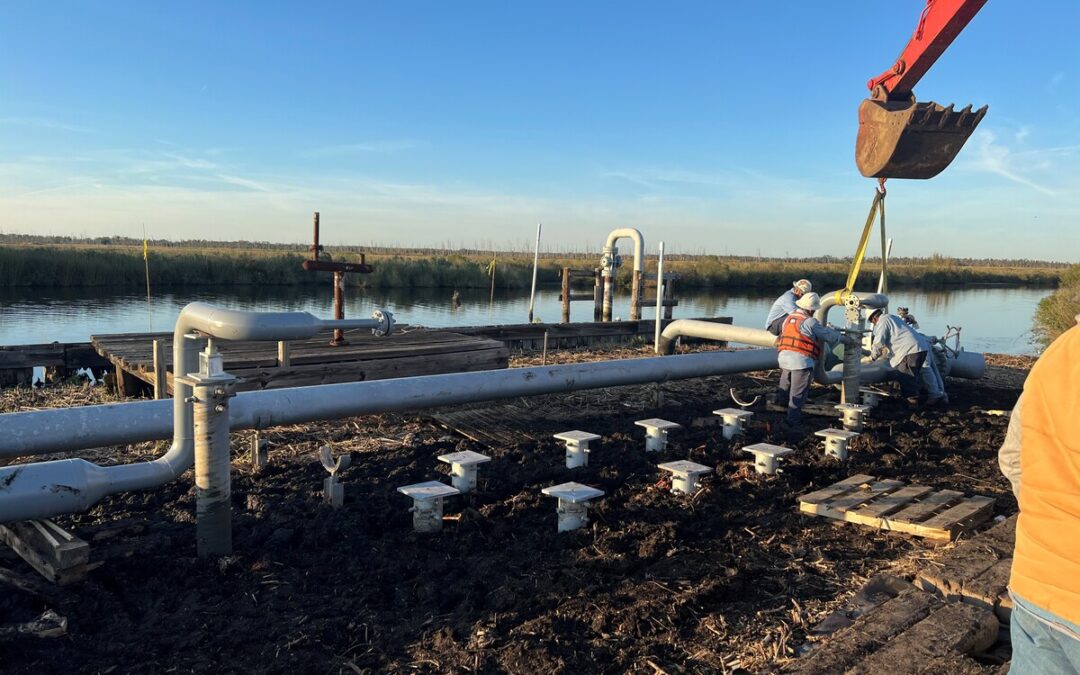
For example, in a petrochemical facility, helical piles can be installed from grade to support deep sump and retrofit pipe foundations — all within an active corridor and with minimal site disturbance. These projects demonstrate how flexible and efficient helical piles can be, even in the most demanding industrial environments.
Why Choose Helical Piles for Your Petrochemical Project?
When it comes to foundation systems in petrochemical environments, you need a solution that performs under pressure. Helical piles offer a range of benefits that make them a smart choice for sump and pipe support:
Fast, non-invasive installation
Helical piles can be installed quickly and cleanly with minimal excavation, low vibration, and compact equipment. This is ideal for busy, high-risk environments.
Long-term durability and stability
Helical piles provide lasting support in challenging soil conditions, with proven load-bearing capabilities for compression and tension applications.
Adaptable to tough site conditions
From tight working corridors to deep excavations, helical piles are versatile enough to meet the needs of even the most complex petrochemical projects.
Lower environmental impact
Compared to traditional foundation methods, helical piles reduce site disruption, excavation, and soil displacement — aligning with environmental safety standards and sustainability goals.
Turnkey support with Elite Helical
At Elite Helical, we offer complete, start-to-finish support. From design aid and material supply to expert installation, our team ensures your project is built on a solid, dependable foundation.
Need Petrochemical Sump or Pipe Support? Let’s Talk
If you’re planning a sump or pipe support project in a petrochemical facility, the foundation system you choose matters. At Elite Helical, we specialize in customized helical pile solutions engineered to perform in the most challenging industrial environments.
With decades of experience, industry-leading safety practices, and the fastest response times in the business, our team is ready to help you build with confidence from design through installation.
Contact us today to learn how Elite Helical can support your next project with safer, faster, and smarter foundation solutions.